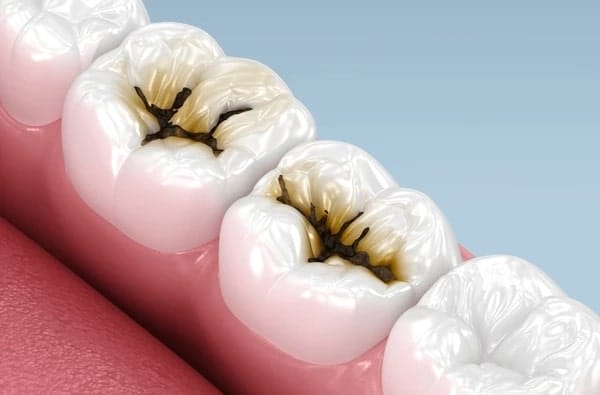
You brush, you floss, you try to avoid too many sweet snacks, yet somehow a dental examination reveals the words nobody enjoys hearing, tooth decay. Cavities can feel frustrating, especially when you thought you were doing everything right. The key is understanding how dental caries develop, what stage they are at, and what can realistically be done to manage them safely and professionally.
Cavities, also known as dental cavities or tooth decay, occur when plaque bacteria produce acids that attack enamel. This process begins with enamel demineralisation. If not addressed, enamel breakdown follows, then dentine involvement, and in more advanced cases, pulp inflammation. The earlier decay is identified, the more conservative the management options may be.
What Actually Causes Cavities To Form?
Tooth decay is not random. It develops through a predictable process involving plaque bacteria, dietary sugars, and time. When sugar is consumed, bacteria in plaque produce acids. These acids dissolve minerals from enamel, leading to enamel demineralisation. If plaque is not removed effectively, repeated acid attacks cause structural breakdown.
Common risk factors include:
- Frequent sugary snacks or drinks
- Inadequate oral hygiene
- Dry mouth
- Deep grooves in teeth
- Irregular dental examinations
The stage of decay plays a crucial role in determining management.
What Are The Stages Of Tooth Decay?
Understanding the progression helps clarify why early assessment matters.
- Enamel demineralisation
- Enamel breakdown
- Dentine involvement
- Pulp inflammation
At the earliest stage, enamel may show white spot lesions, indicating mineral loss. With appropriate professional monitoring and fluoride support, early lesions may stabilise. Once a physical hole forms, restorative dental treatment is generally required.
Can Cavities Be Reversed?
Early enamel demineralisation can sometimes be stabilised when detected promptly. Fluoride toothpaste and professional fluoride applications support remineralisation by strengthening enamel. However, once decay progresses to structural breakdown, it cannot simply disappear.
This is where restorative dental treatment becomes necessary. A dental filling procedure removes decayed material and restores the tooth’s shape and function. Modern restorative materials are designed to blend naturally while protecting remaining tooth structure.
What Symptoms Should You Watch For?
Not all cavities cause immediate pain. Some develop silently. Possible symptoms include:
- Tooth sensitivity to cold or sweet foods
- Visible holes or dark spots
- Discomfort when biting
- Persistent bad taste
- Toothache
Symptoms depend on the stage of decay and the area affected.
How Are Cavities Managed Professionally?
Management varies depending on severity.
| Stage | Possible Management Approach |
|---|---|
| Early enamel lesion | Monitoring and fluoride support |
| Enamel breakdown | Restorative filling |
| Dentine involvement | Filling or more extensive restoration |
| Pulp inflammation | Further assessment and advanced care |
The goal is always to preserve as much natural tooth structure as possible.
What Preventive Measures Truly Make A Difference?
Preventive dental care plays a central role in reducing cavity risk.
Daily Habits That Support Enamel Protection
- Brushing twice daily with fluoride toothpaste
- Flossing to remove plaque between teeth
- Reducing frequency of sugary snacks
- Drinking water after meals
- Attending regular dental examinations
Fluoride toothpaste strengthens enamel and supports remineralisation. Fissure sealants may also be considered where clinically appropriate, particularly for teeth with deep grooves that trap plaque bacteria.
Australian oral health reports consistently highlight the link between dietary sugar frequency and caries rates. Limiting sugar exposure reduces acid attacks and supports enamel recovery between meals.
Why Does Early Detection Matter So Much?
Decay progression is gradual but continuous if left unmanaged. Early stage tooth decay may not cause pain, yet it is still active. Regular dental examination allows identification before symptoms escalate.
Delaying care can lead to dentine involvement or pulp inflammation, both of which require more complex treatment. Early management protects both function and comfort.
How Does Diet Influence Cavity Development?
Sugar and oral health are closely connected. It is not only the amount of sugar consumed, but how often it is consumed. Frequent snacking increases the number of acid attacks on enamel. Allowing time between meals supports natural remineralisation processes.
Dietary awareness combined with proper oral hygiene routine creates a strong defence against dental caries management challenges.
Why Choose Palm Beach Dental For Cavity Management?
When it comes to managing tooth decay, precision and prevention go hand in hand. Palm Beach Dental provides comprehensive dental examinations focused on early detection of enamel demineralisation and decay progression. Each assessment considers individual risk factors such as diet, dry mouth, and plaque accumulation patterns.
At Palm Beach Dental, treatment planning is tailored to the stage of decay. Early lesions are monitored carefully, while restorative dental treatment is delivered conservatively where required. The focus remains on protecting natural tooth structure and reinforcing preventive strategies so patients feel confident about long term oral health. Ongoing education about fluoride toothpaste, plaque control, and dietary awareness forms part of every preventive approach.
Important FAQ’s
Q1. Can brushing alone remove a cavity?
Brushing removes plaque and helps prevent new cavities, but it cannot reverse established structural decay.
Q2. Are early cavities painful?
Early enamel lesions often do not cause pain. Sensitivity may appear as decay progresses.
Q3. What is enamel demineralisation?
It is the early stage of mineral loss from enamel caused by acid produced by plaque bacteria.
Q4. How often should dental examinations occur?
The frequency varies depending on individual risk factors and should be discussed with a dental professional.
Q5. Does fluoride toothpaste help prevent cavities?
Yes, fluoride toothpaste strengthens enamel and supports remineralisation.
Q6. Why do some cavities develop even with good brushing?
Factors such as diet frequency, saliva flow, and tooth anatomy can influence cavity risk despite regular brushing.
References
- Australian Dental Association: https://www.ada.org.au
- Australian Institute of Health and Welfare Oral Health Reports: https://www.aihw.gov.au/reports/dental-oral-health
- Australian Government Department of Health Oral Health Information: https://www.health.gov.au
Disclaimer
All dental procedures involve potential risks and benefits. The information provided in this blog is general in nature and should not be taken as medical advice. We recommend that you seek guidance from a suitably qualified health professional before making decisions about your oral health. Where appropriate, you may also wish to consider obtaining a second opinion.
Any images or videos featured are shared with the informed consent of our patients and are intended for educational purposes only. They are not a guarantee of results, as every patient is unique. Treatment outcomes — including recovery, potential complications, and effectiveness — can vary from person to person.