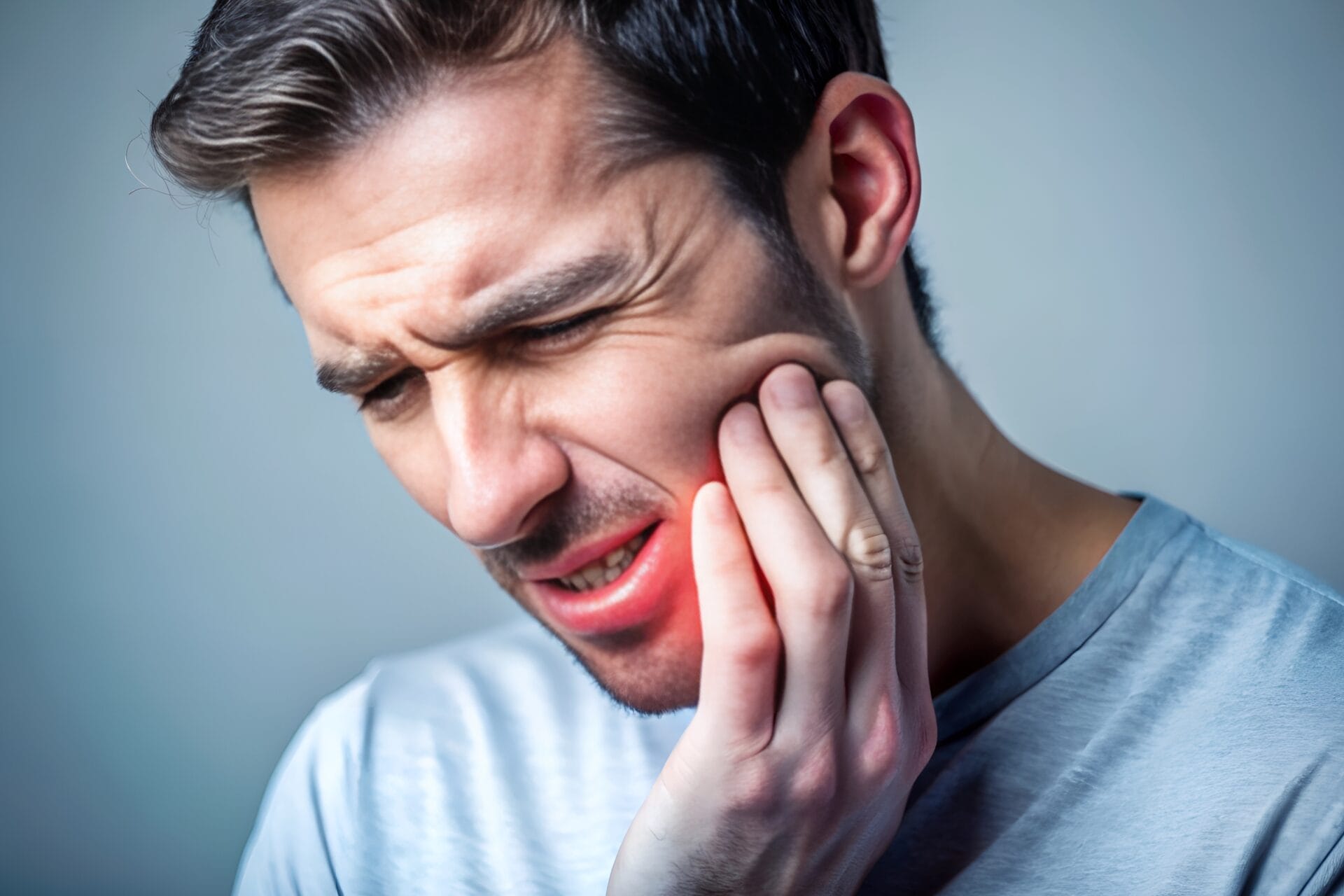
Wisdom tooth pain is one of the more common reasons people come in to see us urgently at our Palm Beach practice — and one of the most variable dental problems to treat, because every wisdom tooth and every jaw is different. The good news is that modern assessment is fast (a 3D X-ray shows the exact position of the tooth, the nerve, and the sinus) and modern extraction is gentler than most patients expect. At Palm Beach Dental, Dr Jijesh Nhalila-Valappil assesses every wisdom tooth case with our onsite 3D X-ray and recommends removal only when there is a clear clinical reason. The practice has been looking after Gold Coast families for nearly 50 years, and our transparent pricing for wisdom tooth removal is published in full on the website.
Why do wisdom teeth cause pain?
Wisdom teeth cause pain when there is not enough room in the jaw for them to erupt fully, which leads to impaction, infection, decay, or pressure on the neighbouring tooth. Wisdom teeth are the third molars, the last adult teeth to develop, and they typically emerge between the ages of 17 and 25 (per the Australian Dental Association). The modern human jaw is smaller than that of our ancestors, so by the time the wisdom teeth try to come through, the space is often already taken. This causes one of 4 problems: full impaction (the tooth is stuck under the gum and cannot erupt at all), partial impaction (the tooth breaks through the gum partway, leaving a flap of tissue that traps food and bacteria), sideways growth (the tooth pushes on the second molar, causing decay or resorption on the neighbour), or infection (pericoronitis, an inflamed gum flap around a partially erupted tooth).
What are the signs of an impacted wisdom tooth?
The 6 main signs of an impacted wisdom tooth are pain at the back of the jaw, swollen or bleeding gums behind the second molar, bad taste or smell, difficulty opening the mouth, swollen lymph nodes under the jaw, and sometimes facial swelling. Pain from an impacted tooth is often intermittent and worsens when chewing or biting down on the area. A partially erupted tooth with a gum flap is the classic setup for pericoronitis — the gum around the tooth gets red, swollen, and tender, and pus can drain from under the flap, causing a bad taste. Difficulty opening the mouth (trismus) is a sign that the inflammation has spread to the jaw muscles. A wisdom tooth that is impacted sideways can also cause decay on the back of the second molar, often without symptoms until the second molar starts to ache.
How does Palm Beach Dental assess wisdom teeth?
Palm Beach Dental assesses wisdom teeth in 3 steps: a clinical exam, an onsite OPG (full-mouth panoramic X-ray), and an onsite 3D X-ray (CBCT) when the case is complex. The clinical exam checks the position of the gum, the swelling, the bite, and the openness of the mouth. The OPG shows all four wisdom teeth in a single image, the roots, the jawbone, and the general position of the nerves and sinuses. For impacted lower wisdom teeth, a 3D X-ray is often used to map the exact relationship between the tooth root and the inferior alveolar nerve (the nerve that runs through the lower jaw) — this is the single most important step in avoiding nerve damage during surgical extraction. Dr Jijesh reads the imaging himself and walks you through the findings on the screen, so you understand exactly what is happening before any treatment is discussed.
When does a wisdom tooth need to be removed?
A wisdom tooth needs to be removed when it is causing pain, infection, decay, or damage to the neighbouring tooth, or when X-rays show it is unlikely to erupt into a functional position. Healthdirect Australia estimates that around 85% of wisdom teeth eventually need to be removed because there is not enough room in the modern jaw to accommodate them. The common indications are: recurrent pericoronitis, decay in the wisdom tooth that cannot be restored, decay in the second molar caused by the wisdom tooth, a cyst or other pathology around the tooth, and orthodontic or prosthetic reasons (the wisdom tooth is blocking other dental work). Wisdom teeth that are fully erupted, functional, easy to clean, and monitored regularly can often be left in place. The decision is always made jointly by the patient and the dentist after reviewing the imaging.
What sedation options are available for wisdom tooth removal?
The 3 sedation options for wisdom tooth removal at Palm Beach Dental are local anaesthetic alone, nitrous oxide (happy gas) with local anaesthetic, and twilight (sleep) sedation with local anaesthetic — with general anaesthetic in hospital for the most complex cases. Local anaesthetic alone is enough for most simple upper wisdom tooth extractions. Nitrous oxide (happy gas) is breathed through a small nose piece, takes effect within minutes, and wears off quickly — published at AUD 99 per hour on the Palm Beach Dental price list. Twilight (sleep) sedation is delivered by a visiting specialist and is suited to patients who are anxious, who need multiple wisdom teeth out, or whose extraction is expected to be longer than 30 minutes — published at AUD 599 per hour. For deeply impacted teeth, the practice refers patients to a day-surgery hospital for treatment under general anaesthetic. Every option is discussed in detail at the consultation, and anxious patients are given extra time to ask questions.
How much does wisdom tooth removal cost in Palm Beach?
Wisdom tooth removal at Palm Beach Dental is published at AUD 299 to AUD 799 per tooth, with surgical extractions at AUD 399 to AUD 699 and complex surgical cases quoted after a 3D X-ray assessment. A straightforward erupted upper wisdom tooth sits at the lower end; a partially erupted lower wisdom tooth sits in the middle; a fully bony impacted lower wisdom tooth sits at the top. Sedation is billed by the hour on top of the surgical fee, and a general anaesthetic in hospital is a separate quote through the day-surgery facility. Health fund rebates apply under major dental extras for most Australian funds, and the team accepts all major funds and Veterans Affairs. Payment can be spread across four interest-free instalments with Afterpay, or over a longer term through the National Dental Plan (Humm) — useful for neighbouring Currumbin patients and other Gold Coast families planning multiple extractions. Our wisdom teeth removal service page describes the procedure in more detail.
How long is recovery after wisdom tooth removal?
Recovery from a simple wisdom tooth extraction takes 3–5 days, while a surgical extraction takes 7–10 days, with the first 24–48 hours being the most uncomfortable. The first 24 hours are the critical window: avoid rinsing, avoid brushing the extraction site, avoid alcohol and smoking, avoid hot drinks, and avoid vigorous exercise. Bite firmly on the gauze pad placed by the dentist for 30–45 minutes to help a clot form. Mild pain and swelling peak at 48–72 hours and then settle, and over-the-counter pain relief (paracetamol or ibuprofen, taken as directed) is usually enough. Stitches, if used, are usually dissolvable. A soft, cool diet (yoghurt, smoothies, mashed potato, scrambled eggs) is recommended for the first 2 days. If you develop severe pain at 3–4 days, fever, or a return of bleeding, contact the practice the same day — these are signs that need a review.
Frequently asked questions
Do all wisdom teeth need to be removed?
No. Wisdom teeth that are fully erupted, functional, easy to clean, and monitored regularly with X-rays can often be left alone. The decision depends on the position of the tooth, the room in the jaw, and the patient’s age.
Is wisdom tooth removal painful?
The procedure itself is painless under local anaesthetic. Most patients describe the pressure and the noise as the most uncomfortable parts. Sedation options reduce awareness for anxious patients. The recovery is sore for 3–5 days but is managed with over-the-counter pain relief in most cases.
How do I know if my wisdom tooth is infected?
The classic signs are a swollen red gum flap behind the second molar, pain when biting, a bad taste or smell, difficulty opening the mouth, and sometimes fever or facial swelling. Any of these is a reason to book a same-week assessment at our emergency dentist service.
Can I be asleep for the extraction?
Yes. Twilight (sleep) sedation is available at the practice for an additional fee, and general anaesthetic in a day-surgery hospital is an option for the most complex cases. The right choice depends on the complexity of the extraction and the patient’s anxiety level.
What is a dry socket?
A dry socket is when the blood clot in the extraction site dissolves or is dislodged in the first 3–5 days, exposing the bone underneath. It causes a deep, throbbing pain that starts 3–4 days after the extraction and is treated by the dentist with a medicated dressing. Avoiding smoking, straws, and vigorous rinsing in the first 48 hours greatly reduces the risk.
When can I go back to work or sport?
Most patients return to desk work the next day and to light exercise after 48–72 hours. Contact sport, heavy lifting, and swimming are best avoided for 5–7 days. The dentist will give you a personalised timeline at the consultation.
Where Can You Receive Wisdom Tooth Pain / Impacted Wisdom Teeth Care in Palm Beach?
If you are looking for wisdom tooth pain / impacted wisdom teeth care in Palm Beach or the Gold Coast, fast assessment makes a difference. At Palm Beach Dental, wisdom teeth are approached with a careful diagnosis using onsite 3D X-ray, a clear discussion of options, and a sedation choice that fits the patient. From a simple extraction under local anaesthetic to a surgical extraction under twilight sedation, the focus is on a calm, safe, well-planned procedure. Whether the case is straightforward or complex, every patient receives guidance tailored to their specific tooth position, anxiety level, and recovery needs, helping support long term oral health and comfort.
References
- Australian Dental Association — https://www.ada.org.au
- Healthdirect Australia — https://www.healthdirect.gov.au
- Better Health Channel (Victoria) — https://www.betterhealth.vic.gov.au
- National Health and Medical Research Council (NHMRC) — https://www.nhmrc.gov.au
- Australian Health Practitioner Regulation Agency (AHPRA) — https://www.ahpra.gov.au
All dental procedures involve potential risks and benefits. The information provided in this blog is general in nature and should not be taken as medical advice. We recommend that you seek guidance from a suitably qualified health professional before making decisions about your oral health. Where appropriate, you may also wish to consider obtaining a second opinion. Any images or videos featured are shared with the informed consent of our patients and are intended for educational purposes only. They are not a guarantee of results, as every patient is unique. Treatment outcomes — including recovery, potential complications, and effectiveness — can vary from person to person.