You brush every morning. You try to be mindful of sugar. Yet somehow cavities still happen. Tooth decay, also known as dental caries, remains one of the most common oral health conditions across Australia. It does not begin with pain or visible holes in teeth. Instead, it often starts quietly with enamel demineralisation that many people do not notice.
Understanding how cavity formation develops makes it easier to prevent it. Tooth decay is not random. It follows a predictable pattern influenced by plaque bacteria, diet, oral hygiene habits, and time.
What Exactly Is Tooth Decay and What Happens Inside the Tooth?
Tooth decay occurs when plaque bacteria metabolise sugars from food and drinks. During this process, acid production in plaque increases. This acid attack on enamel weakens the tooth surface. Repeated acid exposure leads to enamel erosion and eventual tooth structure breakdown.
In the early stage, enamel demineralisation may appear as a white spot lesion. At this point, the process may still be reversible through remineralisation supported by fluoride protection and improved oral hygiene.
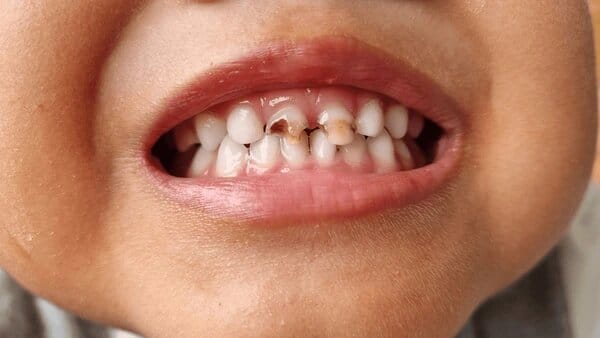
If the acid attack continues, a cavity forms. Once enamel is permanently damaged, restorative treatment is required to repair the affected area.
How Does the Decay Process Progress Over Time?
Tooth decay develops in stages. It rarely occurs suddenly.
| Stage | What Happens | Symptoms | Possible Management |
|---|---|---|---|
| Early demineralisation | Enamel weakens | Often no pain | Fluoride support and monitoring |
| Enamel cavity | Surface breakdown | Sensitivity possible | Dental filling |
| Dentine involvement | Deeper progression | Increased discomfort | Restoration |
| Pulp infection | Nerve affected | Pain, swelling | Root canal or extraction |
Early decay detection is crucial. Once dentine involvement occurs, sensitivity increases and the progression can accelerate.
What Causes Dental Caries to Develop in the First Place?
Several factors contribute to cavity formation.
- Frequent sugar consumption
- Inadequate brushing and flossing
- Reduced saliva flow
- Poor dietary habits
- Irregular dental check ups
Sugar and tooth decay are strongly linked because plaque bacteria feed on fermentable carbohydrates. The frequency of sugar intake matters more than the total amount consumed. Frequent snacking allows acid to attack enamel repeatedly without adequate recovery time.
Reduced saliva flow also increases risk because saliva plays a protective role by neutralising acids and supporting remineralisation.
Why Does Diet Play Such a Powerful Role in Enamel Damage?
Each time sugary or acidic food is consumed, plaque bacteria produce acid. This acid can soften enamel for up to 30 minutes. If brushing or eating occurs during this softened state, enamel erosion may worsen.
Common contributors include:
- Soft drinks
- Sports drinks
- Processed snacks
- Sticky confectionery
- Frequent grazing between meals
Limiting exposure time helps protect enamel. Balanced meals and spacing snacks reduce acid frequency.
Can Tooth Decay Be Prevented With the Right Habits?
Preventive dental care focuses on interrupting the acid cycle and strengthening enamel.
Key strategies include:
- Brushing twice daily with fluoride toothpaste
- Daily flossing to remove bacteria between teeth
- Reducing frequent sugar exposure
- Regular dental assessment
- Professional dental cleaning and checkup when recommended
Fluoride protection supports enamel strength and enhances remineralisation. It also reduces acid damage from plaque bacteria.
Decay between teeth is common because brushing alone cannot fully clean these areas. Flossing plays an important role in reducing bacterial build up.
Why Is Early Detection So Important?
In the earliest stage, enamel demineralisation may not cause pain. Many patients are unaware of decay until it progresses. Early detection allows intervention before dentine involvement occurs.
Once dentine is affected, cavities enlarge more quickly because dentine is softer than enamel. Prompt restorative treatment prevents pulp infection and further structural damage.
What Happens If Tooth Decay Is Not Treated?
Untreated decay continues to progress deeper into the tooth. As the pulp becomes involved, pain and swelling may develop. At this stage, management options become more complex.
Risks of untreated dental caries include:
- Persistent pain
- Infection
- Tooth loss
- Spread of infection to surrounding tissues
Addressing decay early helps preserve natural tooth structure and reduce the likelihood of advanced intervention.
Is Tooth Decay Common in Children and Adults Alike?
Yes. Dental caries affects both children and adults. Children may experience higher risk due to developing enamel and frequent snacking habits. Adults may experience increased risk due to dry mouth, gum recession, or dietary patterns.
Preventive dental care should be adapted to individual risk factors. Oral hygiene habits, dietary counselling, and fluoride use may vary depending on age and lifestyle.
How Does Palm Beach Dental Support Patients in Managing Tooth Decay?
At Palm Beach Dental, preventing and managing dental caries forms a core part of long term oral health care. Early decay detection, clear explanation of enamel demineralisation, and tailored preventive guidance help patients understand how cavity formation occurs and how to reduce risk. When restorative treatment is required, it is approached with a focus on preserving as much healthy tooth structure as possible. By combining education, careful assessment, and practical support, Palm Beach dentist empowers patients to make informed decisions about protecting their enamel and maintaining healthy smiles.
Important FAQs
Q1. Can early tooth decay be reversed?
Early enamel demineralisation can sometimes be stabilised with fluoride and improved oral hygiene before a cavity forms.
Q2. Does sugar alone cause cavities?
Sugar feeds plaque bacteria which produce acid. This acid weakens enamel and leads to decay.
Q3. Is tooth decay always painful?
Early stages are often painless. Pain usually develops once deeper layers are involved.
Q4. How often should teeth be checked for cavities?
The recommended frequency varies depending on individual risk factors and should be discussed with a dental professional.
Q5. Can adults still develop cavities?
Yes. Dry mouth, dietary habits, and gum recession can increase adult risk.
Q6. Does fluoride make a difference?
Fluoride strengthens enamel and supports remineralisation, helping to reduce cavity risk.
References
- Australian Institute of Health and Welfare
https://www.aihw.gov.au - Australian Dental Association
https://www.ada.org.au - Healthdirect Australia
https://www.healthdirect.gov.au - Better Health Channel Victoria
https://www.betterhealth.vic.gov.au
Disclaimer
All dental procedures involve potential risks and benefits. The information provided in this blog is general in nature and should not be taken as medical advice. We recommend that you seek guidance from a suitably qualified health professional before making decisions about your oral health. Where appropriate, you may also wish to consider obtaining a second opinion.
Any images or videos featured are shared with the informed consent of our patients and are intended for educational purposes only. They are not a guarantee of results, as every patient is unique. Treatment outcomes — including recovery, potential complications, and effectiveness — can vary from person to person.