A click when you chew, a catch when you yawn, a dull ache in front of your ears that gets worse by mid-afternoon — these are the small signs that the temporomandibular joint (TMJ) is under strain. At Palm Beach Dental, jaw joint problems are assessed and managed conservatively wherever possible, with a clear plan that combines self-care, an occlusal splint and a check on the drivers (often grinding, bite issues or stress). The practice’s principal dentist, Dr Jijesh Nhalila-Valappil, draws on training in cosmetic and restorative dentistry and a Masters in Public Health to look at the whole picture, not just the joint.
What is TMJ and what causes jaw pain?
The TMJ is the hinge joint that connects your lower jaw to your skull in front of each ear, and jaw pain (or a “TMJ disorder”) arises when the joint, the chewing muscles or the bite are placed under abnormal load. Healthdirect Australia reports that temporomandibular disorders affect up to 1 in 4 people at some point, with women more commonly affected than men. Better Health Channel lists the common contributors as jaw injury, arthritis, teeth grinding, stress, and a misaligned bite. Because the drivers are mixed, the most effective treatment is usually a combination of self-care, an occlusal splint, and a review of any habits that overload the joint.
What are the common signs of a TMJ disorder?
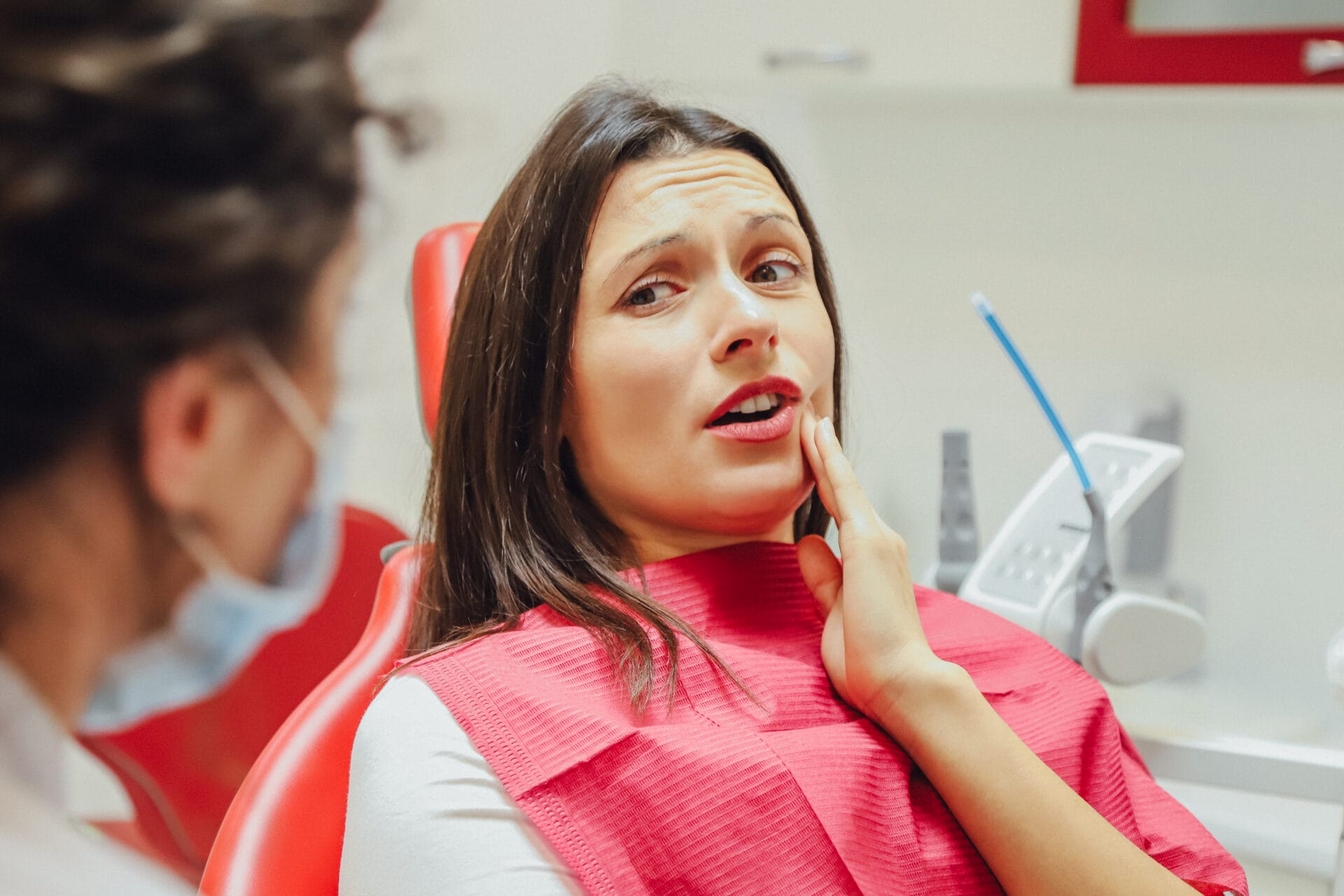
The common signs of a TMJ disorder are jaw pain or tenderness, clicking or grating sounds when opening or closing, limited mouth opening, earache without infection, facial muscle fatigue, and occasional locking of the jaw open or closed. Many patients also notice morning headaches, neck tension or a feeling that their bite has “shifted”. Some signs are subtle — a small click that has been there for years can be normal, but a new click with pain, a change in how the teeth meet, or a jaw that gets “stuck” warrants a check. The team at Palm Beach Dental routinely screens for these signs at every 6-month check-up, using the practice’s onsite OPG and 3D X-ray to look at the joint and surrounding bone.
How does a dentist assess jaw pain?
A dentist assesses jaw pain by listening to the history, examining the jaw muscles, checking the joint for clicks or deviation, assessing the bite, and using imaging to rule out other causes such as decay, infection or arthritis. At Palm Beach Dental, the assessment typically forms part of a comprehensive Dental Check-up and Clean visit, with extra time built in for jaw-focused questions. The dentist palpates the chewing muscles and the joint itself, measures how wide the mouth opens comfortably, checks for deviation when opening, and looks at how the teeth meet. Onsite OPG and 3D X-ray allow the joint and surrounding bone to be visualised without sending you to a separate imaging centre. If a medical cause such as arthritis is suspected, the team coordinates a referral to a GP or specialist.
What is an occlusal splint and how does it help?
An occlusal splint is a hard, custom-fitted plastic appliance worn (usually at night) that holds the jaw in a stable position, reduces muscle load on the joint, and prevents the teeth from being ground together under stress. The National Institute of Dental and Craniofacial Research recommends conservative treatment — including self-care, jaw exercises and an occlusal splint — as the first-line approach for most TMJ disorders, with invasive options reserved for specific cases. The splint does not “fix” the joint, but it removes the harmful load so the muscles can relax, the inflammation can settle and the joint can rest. Palm Beach Dental’s splints are made from an impression of your teeth and adjusted at a follow-up visit for a precise fit, and the Sports Mouthguards and Night Guards service page describes the practice’s broader protective appliance options.
When is a referral to a TMJ specialist needed?
A referral to a TMJ specialist is needed when conservative care has not improved symptoms after several weeks, when there is significant locking of the jaw, when imaging suggests structural joint damage, or when pain is severe and disrupting sleep or eating. Most TMJ disorders settle with a combined approach of self-care, splint therapy and a review of contributing factors, so specialist referral is not the first step for the majority of patients. If the team at Palm Beach Dental identifies red flags — persistent locking, suspected arthritis, neurological symptoms or pain that is not responding to standard care — they will refer you to a specialist oral and maxillofacial surgeon or to a GP for further workup. The practice’s onsite 3D X-ray gives the specialist high-quality images to work from, which speeds up the referral pathway.
How can I relieve jaw pain at home?
Jaw pain can be relieved at home with a short list of conservative measures: eat soft foods for a few days, apply a warm compress to relax tight muscles or a cold pack to reduce acute inflammation, avoid wide yawning and chewing gum, and practise gentle jaw exercises as recommended by your dentist. Better Health Channel supports this conservative approach as a first step. A simple exercise is to place the tongue on the roof of the mouth and slowly open and close — this trains the jaw to open in a straight, joint-friendly path. Over-the-counter anti-inflammatories can help short-term pain if your GP or pharmacist confirms they are appropriate for you. If symptoms do not improve within 2 weeks, or if they worsen, book a check-up so the dentist can rule out other causes and adjust the plan.
Frequently asked questions
Is jaw clicking serious? A long-standing, painless click can be normal. A new click with pain, locking, or a change in how the teeth meet is worth assessing promptly.
Will an occlusal splint cure my TMJ disorder? It does not cure the joint itself, but it removes harmful load, reduces muscle pain and allows inflammation to settle, which resolves symptoms in most conservative-care cases.
How long does TMJ treatment take? Most patients notice improvement within 2 to 6 weeks of starting self-care and splint therapy. Complex cases with structural joint damage may take longer and may need specialist input.
Can stress cause jaw pain? Yes. Stress is one of the most common contributors to jaw clenching and TMJ muscle pain, and managing it is often a key part of the plan.
Where is the practice located? Palm Beach Dental is at 1142 Gold Coast Highway, Palm Beach, QLD, with off-street parking from Palm Beach Avenue or Sixth Avenue. The team also welcomes neighbouring Elanora patients, West Burleigh families and Currumbin locals.
Where Can You Receive TMJ and Jaw Pain Care in Palm Beach?
If you are looking for TMJ or jaw pain care in Palm Beach or the Gold Coast, personalised assessment makes a difference. At Palm Beach Dental, jaw joint issues are approached conservatively and collaboratively. From a thorough check-up that screens the muscles, joint and bite, to a custom occlusal splint made onsite and clear home-care guidance, the focus is on reducing load and inflammation. Whether it is a simple splint and self-care plan, or a coordinated specialist referral, every patient receives a plan tailored to their pattern of jaw pain, helping support long term joint health.
To book a TMJ assessment, call (07) 5534 1011 or visit Palm Beach Dental.
Disclaimer
All dental procedures involve potential risks and benefits. The information provided in this blog is general in nature and should not be taken as medical advice. We recommend that you seek guidance from a suitably qualified health professional before making decisions about your oral health. Where appropriate, you may also wish to consider obtaining a second opinion. Any images or videos featured are shared with the informed consent of our patients and are intended for educational purposes only. They are not a guarantee of results, as every patient is unique. Treatment outcomes — including recovery, potential complications, and effectiveness — can vary from person to person.
References
- Healthdirect Australia. “Temporomandibular Joint Disorders.” https://www.healthdirect.gov.au
- Better Health Channel (Victoria). “Temporomandibular Joint (TMJ) Disorders.” https://www.betterhealth.vic.gov.au
- National Institute of Dental and Craniofacial Research (NIH). “TMJ Disorders.” https://www.nidcr.nih.gov
- Australian Dental Association. “Jaw Joint Problems.” https://www.ada.org.au
- Royal Australian College of General Practitioners. “Temporomandibular Disorders in General Practice.” https://www.racgp.org.au