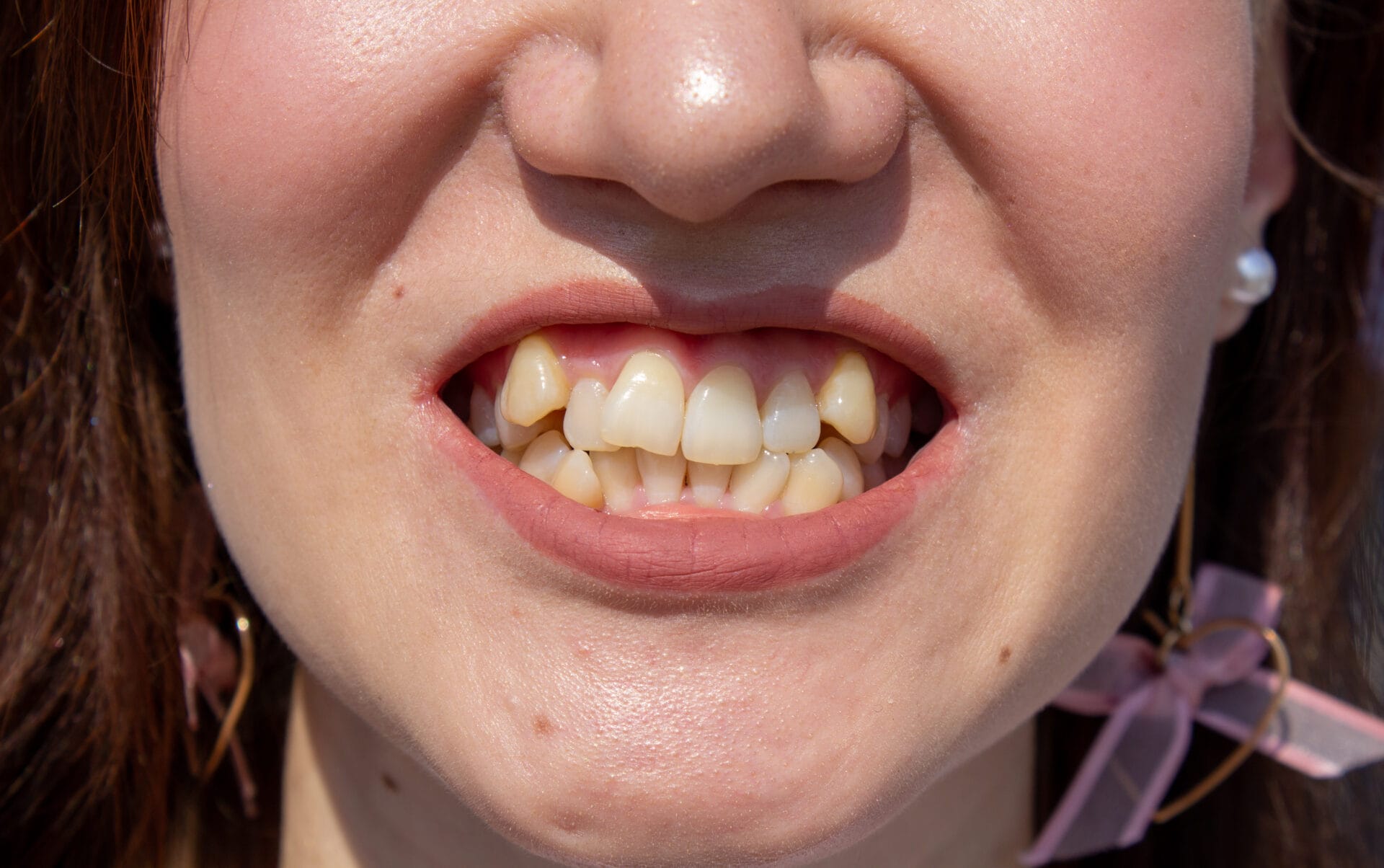
A misshapen tooth — most often a small, pointed “peg” upper lateral incisor — is one of the more common cosmetic concerns seen at our Palm Beach practice. Modern cosmetic dentistry offers three reliable, conservative options: cosmetic bonding, porcelain veneers, and single-tooth crowns. At Palm Beach Dental, Dr Jijesh Nhalila-Valappil plans each case with a digital smile design so you can see the result before committing. The practice has been caring for multi-generational Gold Coast families for nearly 50 years, and pricing is published in full on the website.
What causes a tooth to be misshapen or unusually small?
A misshapen or unusually small tooth usually results from a localised developmental variation called microdontia, with peg laterals being the most common expression. Genetics is the single biggest driver — peg laterals are often inherited and may run alongside other dental anomalies such as missing teeth. Disturbances during the tooth-forming years (the second trimester through roughly age 12) can also produce a small or pointed adult tooth. Less commonly, childhood chemotherapy, hormonal conditions, and trauma to a primary tooth that disrupts the underlying adult tooth bud can play a role. In adults, a tooth can also appear misshapen because of wear, chipping, or failed previous fillings.
What is a peg lateral and how is it treated?
A peg lateral is an upper lateral incisor that develops as a small, tapered, cone-shaped tooth instead of a normal rectangular incisor, and it is the most common localised form of microdontia. The Australian Dental Association cites a population prevalence of roughly 0.5–2.5%, with women affected more often than men and the right side more often than the left. Many patients have a peg lateral on one side and a slightly smaller-than-normal lateral on the other. Because the tooth is healthy underneath, treatment focuses on building the visible portion back up rather than removing it. Three options are used routinely at Palm Beach Dental: direct cosmetic bonding, a porcelain veneer, or a single-tooth crown. The choice depends on the size of the gap to fill, the bite, and how conservative you want to be.
How does cosmetic bonding reshape a misshapen tooth?
Cosmetic bonding reshapes a misshapen tooth by layering tooth-coloured composite resin directly onto the enamel, sculpting it into shape, and hardening it with a curing light — usually in a single appointment without anaesthetic. It is the most conservative and most affordable option for a peg lateral or small tooth. The dentist takes a digital smile design or mock-up so you can see the proposed shape, isolates the tooth, etches the enamel, applies a bonding agent, and adds the resin in layers. Each layer is set with a blue curing light, and the final shape is polished to match the gloss of the neighbouring teeth. Healthdirect Australia puts the typical lifespan of bonded restorations at 3–10 years, which is why bonding is often presented as a “first” treatment — you can upgrade to a veneer later. Our cosmetic bonding page walks through the process.
When are veneers the right choice for a misshapen tooth?
Veneers are the right choice when a misshapen tooth needs a longer-lasting cosmetic result, when colour is also a concern, or when a small but normal-shaped tooth needs to look wider. A porcelain veneer is a thin, custom-made shell that bonds to the front surface of the tooth. It is stronger and more stain-resistant than bonding because the material is fired ceramic rather than chairside composite. Veneers require a small amount of enamel preparation (usually 0.3–0.7 mm from the front surface) and involve two appointments: one to prepare the tooth and take a digital scan, and a second to bond the finished veneer. They are particularly useful when the peg lateral is paired with mild crowding, an uneven gumline, or a patient who also wants to lighten the visible front teeth. Our porcelain veneers page describes the workflow.
Can crowns be used to fix a single misshapen tooth?
Yes — a single-tooth crown is used when a misshapen tooth has lost more than roughly 50% of its natural structure, has had root canal treatment, or sits under high bite forces that would shorten the life of bonding or a veneer. A crown covers the whole tooth rather than just the front surface, giving the most strength and the most predictable long-term result for compromised teeth. The dentist prepares the tooth on all sides, takes a digital scan, and cements the final crown (usually all-ceramic for front teeth) at a second visit. At Palm Beach Dental, single-tooth crowns fall under our crowns and bridges service. For a peg lateral that is otherwise healthy, a crown is usually the third option on the list — bonding first, veneer second, crown reserved for teeth that genuinely need full coverage.
How much does treatment cost in Palm Beach?
Treatment cost depends on the option you choose, and the published price list at Palm Beach Dental starts from about AUD 165 for a bonded build-up, with single veneers and crowns quoted per tooth after consultation. A simple cosmetic bonding appointment is the most affordable route and is often completed in one visit. Veneers and crowns are quoted individually after a full assessment, and the practice publishes a transparent fee guide on the website so you can plan ahead. Health fund rebates apply for many of these procedures under major dental or cosmetic extras, and the team accepts all major Australian health funds as well as Veterans Affairs. Payment can also be spread across four interest-free instalments with Afterpay, or over a longer term through the National Dental Plan (Humm), which keeps larger treatment plans within reach for neighbouring Elanora patients and other Gold Coast families.
How long does the result last?
The result lasts between roughly 3 and 15 years depending on the option chosen, with bonding at the shorter end, veneers in the middle, and crowns at the longer end — provided you look after them. A direct composite bonding typically needs a refresh every 3–10 years (per Healthdirect Australia), whereas a porcelain veneer is rated at 10–15 years of clinical life in the published literature. Crowns last 10–15+ years with normal care. Longevity depends on the bite, grinding or clenching habits, diet, and hygiene. A custom-made night guard is the single most effective way to protect any cosmetic work if you grind at night, and our practice fabricates these in-house. Routine six-monthly check-ups and cleans allow the dentist to monitor restoration margins and catch small issues before they shorten its life.
Frequently asked questions
Is a peg lateral purely a cosmetic problem?
In most cases, a peg lateral is a healthy tooth that simply looks small. Functionally, patients usually adapt, but the size mismatch can leave a visible black triangle near the gumline, allow food trapping, or draw attention away from the smile.
Will treatment damage the healthy tooth underneath?
Cosmetic bonding adds material without removing healthy enamel. Veneers require a thin layer of enamel from the front surface (typically 0.3–0.7 mm). Crowns require preparation on all sides. None of these approaches damage the nerve or root.
Can a peg lateral be fixed in one visit?
Bonding can be completed in a single visit. Veneers and crowns require at least two visits because the final restoration is fabricated in a dental laboratory between appointments.
Does private health insurance cover cosmetic bonding or veneers?
Cosmetic treatments are typically not covered by Australian private health funds. Where a procedure is also functionally necessary — for example, a crown on a heavily filled tooth — a rebate may apply.
How do I choose between bonding, a veneer, and a crown?
The choice is usually driven by how much tooth structure is missing, your budget, and how long you want the result to last. A digital smile design consultation lets you see all three options before deciding.
Where Can You Receive Misshapen Tooth (Peg Lateral, Microdontia) Care in Palm Beach?
If you are looking for misshapen tooth (peg lateral, microdontia) care in Palm Beach or the Gold Coast, personalised assessment makes a difference. At Palm Beach Dental, misshapen teeth are approached with a calm, conservative, and digitally planned process. From a digital smile design to a polished final result, the focus is on a natural-looking, healthy smile. Whether it is cosmetic bonding, a porcelain veneer, or a single-tooth crown, every patient receives guidance tailored to their specific tooth shape, bite, and aesthetic goals, helping support long term oral health and confidence.
References
- Australian Dental Association — https://www.ada.org.au
- Healthdirect Australia — https://www.healthdirect.gov.au
- Better Health Channel (Victoria) — https://www.betterhealth.vic.gov.au
- National Health and Medical Research Council (NHMRC) — https://www.nhmrc.gov.au
- Australian Health Practitioner Regulation Agency (AHPRA) — https://www.ahpra.gov.au
All dental procedures involve potential risks and benefits. The information provided in this blog is general in nature and should not be taken as medical advice. We recommend that you seek guidance from a suitably qualified health professional before making decisions about your oral health. Where appropriate, you may also wish to consider obtaining a second opinion. Any images or videos featured are shared with the informed consent of our patients and are intended for educational purposes only. They are not a guarantee of results, as every patient is unique. Treatment outcomes — including recovery, potential complications, and effectiveness — can vary from person to person.