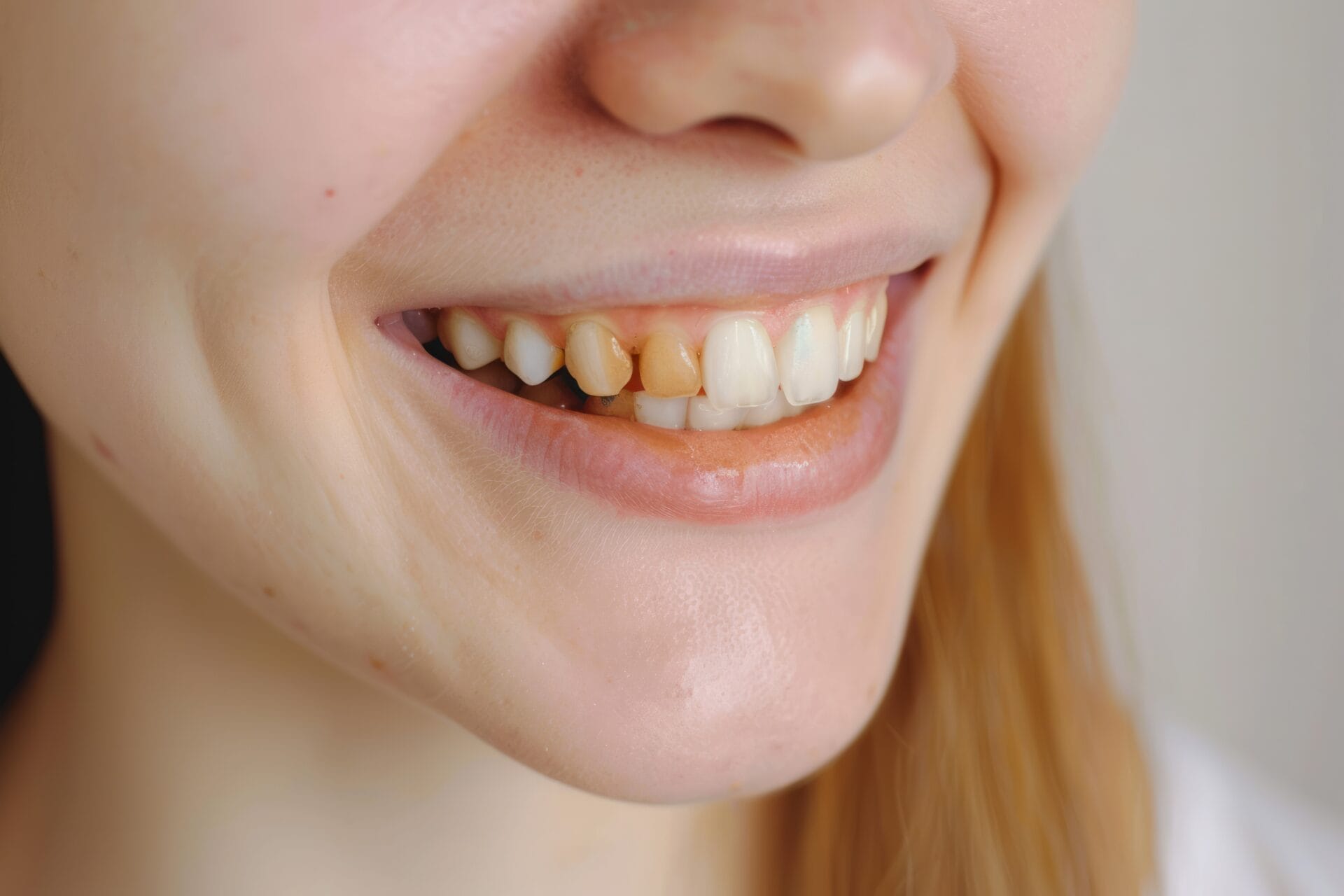
Coffee, tea, red wine, age, and certain medications all leave their mark on a smile. At Palm Beach Dental, we see Gold Coast patients every week who feel their teeth have yellowed, dulled, or developed patchy discolouration they cannot shift with supermarket toothpaste. Our principal dentist Dr Jijesh Nhalila-Valappil (Masters in Public Health, ADA and AACD member) examines the cause of the discolouration first, then recommends the most effective path — professional teeth whitening, cosmetic bonding, or porcelain veneers. The practice has completed more than 100 same-day whitening procedures in the past year and is a proud provider of Philips Zoom.
What causes teeth to become discoloured or stained?
Teeth become discoloured through three broad mechanisms: extrinsic staining from foods and drinks, intrinsic staining from within the tooth structure, and age-related changes that combine both. Identifying which mechanism is at work determines the treatment, so the first step at the practice is a careful examination of where the colour sits.
Extrinsic stains sit on the outer enamel surface. The most common causes are regular tea, coffee, red wine, curry, and tobacco; Healthdirect Australia notes that chromogens in these substances bind to the enamel pellicle and gradually darken the visible tooth surface. Intrinsic stains live inside the enamel or dentine, and are caused by childhood antibiotics (particularly tetracyclines), fluorosis, trauma to a tooth, or genetics. Age-related discolouration combines the two: the enamel thins with age, allowing the yellow dentine beneath to show through, while decades of staining accumulate on the surface.
A dentist can usually tell the difference in minutes by shining a light on the tooth and asking about your history. The right treatment then follows.
What is the difference between intrinsic and extrinsic staining?
Extrinsic staining sits on the outer enamel and responds well to cleaning and whitening; intrinsic staining is embedded in the tooth structure and does not respond to whitening at all. Understanding this difference is the single most important step in choosing a treatment.
| Attribute | Extrinsic stain | Intrinsic stain |
|---|---|---|
| Location | On the enamel surface | Inside enamel or dentine |
| Common causes | Coffee, tea, red wine, tobacco, curry | Tetracycline antibiotics, fluorosis, trauma, ageing |
| Responds to whitening | Yes | No |
| Best treatment | Professional clean + whitening | Veneers or cosmetic bonding |
| Speed of onset | Months to years | Often present from childhood or after trauma |
Whitening gels work by penetrating the outer enamel and breaking down stain molecules with active oxygen. They cannot reach stains that are physically inside the tooth, which is why a single grey tooth from an old sporting injury will not change shade no matter how many whitening sessions you do. The Australian Dental Association recommends a clinical assessment before any whitening treatment, both to confirm the type of stain and to rule out decay or cracks that could be worsened by the gel.
Which stains respond to professional teeth whitening?
Professional teeth whitening reliably improves yellow, brown, and most age-related extrinsic stains, but does not change the shade of intrinsic stains, crowns, veneers, or composite fillings. The single most predictive factor is the original cause of the discolouration.
Yellow and light brown stains from coffee, tea, and smoking typically respond in 2–4 shade shifts after a single in-chair session. Tobacco and long-standing red-wine stains usually need both in-chair whitening and a take-home kit for full results. Grey discolouration from tetracycline antibiotics often responds only partially, even after multiple sessions, and is the case most commonly referred for veneers instead. White-spot fluorosis patches generally do not change with whitening and may need bonding or micro-abrasion.
It is also worth knowing that the active ingredient in whitening gel — usually hydrogen peroxide or carbamide peroxide — is regulated by the Therapeutic Goods Administration (TGA) when supplied by an Australian-registered dentist. Over-the-counter products use lower concentrations, which is why the results from a professional in-chair session are noticeably stronger.
When are veneers or bonding a better option than whitening?
Veneers or bonding are the better option when the discolouration is intrinsic, when a single tooth is discoloured, or when whitening has been tried without success. Both treatments cover the visible surface of the tooth with a new, lighter material, which gives complete control over the final shade.
Cosmetic bonding places a tooth-coloured composite resin directly onto the tooth, shapes it, and sets it with a curing light — usually in a single appointment. It is well suited to a single dark tooth, small chips, or small gaps, and is the most affordable cosmetic option. Porcelain veneers are thin ceramic shells bonded to the front of the teeth, custom-made in a lab, and are the longer-lasting choice for a complete smile change. The practice’s published material notes that porcelain veneers last an average of 10 to 15 years with appropriate care.
A smile makeover consultation at the practice includes Digital Smile Design, where photos are used to plan the final result before any treatment begins — so you see the proposed outcome before committing.
What teeth-whitening options are available at Palm Beach Dental?
Palm Beach Dental offers two professional whitening options: in-chair Philips Zoom whitening completed in a single appointment, and custom take-home whitening kits worn daily for two to four weeks. Both are offered as stand-alone treatments or as part of a broader cosmetic treatment plan.
| Option | Time to results | Wear time | Best for |
|---|---|---|---|
| In-chair Philips Zoom | 1 appointment (about 1 hour) | N/A — done in the chair | Patients wanting fast results before an event |
| Take-home kit | 2–4 weeks | ~30 minutes per day | Patients who prefer to whiten gradually at home |
In-chair whitening uses a stronger gel activated by the Philips Zoom light, and is delivered in 2–4 fifteen-minute sessions within a single appointment. Take-home kits use custom-fitted trays made from impressions of your teeth, filled with a professional gel and worn for around 30 minutes a day for 2–4 weeks. Both options require a healthy baseline — the dentist assesses your suitability and may recommend a professional clean first to remove surface tartar so the gel contacts the enamel evenly.
How much does professional teeth whitening cost in Palm Beach?
Professional teeth whitening at Palm Beach Dental is itemised on the practice’s transparent price list; sedation is not required for whitening so the only cost is the treatment itself plus any pre-whitening cleaning. The team provides a written quote during the consultation.
A professional Airflow clean before whitening costs AUD 185 and is recommended for most patients to remove surface tartar and improve the gel’s contact with the enamel. The whitening treatment itself is quoted separately based on whether in-chair or take-home is chosen. Patients can use Afterpay to split the cost into four interest-free instalments due every two weeks, the National Dental Plan (Humm) for longer interest-free plans, and all major Australian health funds plus Veterans Affairs for any associated general dental work.
Most private health fund “major dental” categories do not cover cosmetic whitening, but the front-desk team can check your specific policy and explain what rebate you can claim.
How do I keep my teeth white after whitening?
Whitening results last 1–3 years on average, and are maintained by avoiding the staining foods and drinks that caused the discolouration in the first place, combined with twice-daily brushing and six-monthly professional cleans. A few small habits make a measurable difference.
Drink coffee, tea, and red wine through a straw where possible, or rinse with water straight after. Quit or reduce smoking — the single biggest controllable cause of tooth staining. Brush twice a day with a soft-bristled brush, floss daily, and book a professional clean every six months to remove the tartar that holds new stains. If you have had cosmetic bonding, remember that the composite resin does not respond to whitening, so if you whiten your natural teeth first and then have bonding done afterwards, the resin is colour-matched to the new shade. If the bonding is older, it may need replacing to match a freshly whitened smile.
A top-up take-home kit, used for a few days every six to twelve months, is the most common way patients maintain their in-chair result long term.
Frequently asked questions
Will whitening damage my enamel? Professional whitening, performed by a registered dentist using TGA-regulated products, does not damage enamel. Some patients experience temporary sensitivity, which usually subsides within 24 hours.
How white can my teeth realistically get? Most patients see a 2–4 shade improvement. The final result depends on the original cause of the discolouration and the natural baseline shade of your teeth.
Can I whiten a crown or veneer? No. Whitening gel only works on natural tooth structure. Existing crowns, veneers, and composite fillings keep their original shade and may need replacement to match a newly whitened smile.
Is take-home whitening as effective as in-chair? Both are effective; in-chair is faster, take-home is more gradual. Many patients combine them — in-chair first, then take-home trays for maintenance.
How do I know if my stains are intrinsic or extrinsic? A quick examination under the dental light tells your dentist which type you have. Most discolouration is a mix, which is why a clinical assessment before whitening is essential.
Where Can You Receive Teeth Whitening in Palm Beach?
If you are looking for treatment for discoloured or stained teeth in Palm Beach or the Gold Coast, personalised assessment makes a difference. At Palm Beach Dental, discoloured and stained teeth are approached with a calm, patient-first conversation about what is causing the shade change. From in-chair Teeth Whitening with Philips Zoom through to porcelain veneers and Cosmetic Bonding for intrinsic staining, the focus is on the option that fits your teeth, your goals, and your budget. Whether it is a single dark tooth or a full smile makeover, every patient receives guidance tailored to their specific whitening needs, helping support long-term confidence. neighbouring West Burleigh patients travel just minutes south along the Gold Coast Highway to begin.
Disclaimer: All dental procedures involve potential risks and benefits. The information provided in this blog is general in nature and should not be taken as medical advice. We recommend that you seek guidance from a suitably qualified health professional before making decisions about your oral health. Where appropriate, you may also wish to consider obtaining a second opinion. Any images or videos featured are shared with the informed consent of our patients and are intended for educational purposes only. They are not a guarantee of results, as every patient is unique. Treatment outcomes — including recovery, potential complications, and effectiveness — can vary from person to person.
References
- Australian Dental Association. Teeth Whitening. https://www.ada.org.au/
- Healthdirect Australia. Teeth Discolouration. https://www.healthdirect.gov.au/
- Therapeutic Goods Administration. Whitening Products. https://www.tga.gov.au/
- Palm Beach Dental. Teeth Whitening in Palm Beach. https://palmbeachdental.com.au/services/teeth-whitening/
- Palm Beach Dental. Veneers Treatment in Palm Beach. https://palmbeachdental.com.au/services/veneers/
- Palm Beach Dental. Cosmetic Bonding in Palm Beach. https://palmbeachdental.com.au/services/cosmetic-bonding/