Maintaining excellent oral hygiene requires more than just brushing your teeth. Dentists emphasize that interdental cleaning plays a vital role in removing plaque and food debris from between the teeth and under the gumline—areas that a toothbrush simply cannot reach. When it comes to interdental cleaning, two popular options are traditional dental floss and modern water flossers (also known as oral irrigators). While both aim to improve gum health, prevent tooth decay, and reduce the risk of periodontal disease, they differ in method, usability, and results.
So which one is better for you—dental floss or a water flosser? The answer depends on a range of factors including your dental condition, comfort preferences, and oral hygiene habits.
What Is the Role of Interdental Cleaning?
Brushing your teeth twice a day removes plaque from the surfaces of the teeth, but up to 40% of the tooth surface can remain untouched without interdental cleaning. This leftover plaque can harden into tartar, cause inflammation, and lead to gum disease or tooth decay. That’s why daily interdental cleaning is essential for comprehensive oral care.
The two main contenders for this job—traditional string dental floss and water flossers—each have distinct attributes, strengths, and drawbacks.
How Does Traditional Dental Floss Work?
Dental floss is a thin, flexible strand used to physically scrape plaque and food particles from the sides of teeth and beneath the gumline. It is available in several formats, including:
- Waxed and unwaxed floss
- Flavoured floss
- Dental tape (wider and flatter for more surface area)
- Super floss (for braces or bridges)
Advantages of Dental Floss:
- Effective at physically removing plaque from tight tooth contacts
- Highly portable and discreet for travel
- No need for power or batteries
- Easy to use in small bathrooms or on the go
- Accessible in various types for personal preference
Drawbacks of Dental Floss:
- Requires good manual dexterity and proper technique
- Can be difficult to manoeuvre around braces, bridges, or dental implants
- May cause gum irritation or bleeding if used incorrectly
- Time-consuming for those with tight schedules
What Is a Water Flosser and How Does It Work?
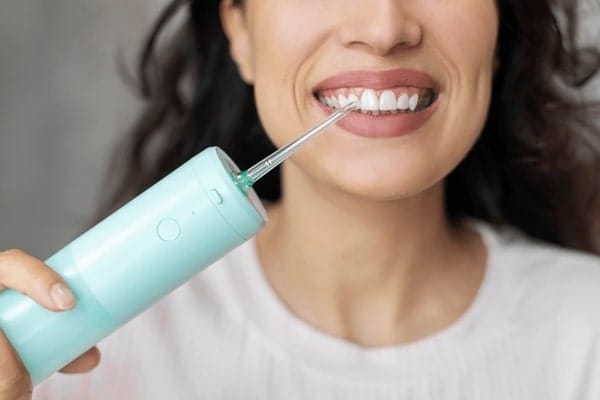
A water flosser is an electronic oral hygiene device that directs a pressurised stream of pulsating water to clean between teeth and below the gumline. The stream helps flush out food particles, reduce bacteria, and stimulate gum tissue.
Advantages of Water Flossers:
- Excellent for cleaning around braces, implants, bridges and crowns
- Easy to use, especially for individuals with arthritis or limited dexterity
- Gentler on gums, reducing the risk of bleeding or irritation
- More likely to encourage consistent use due to ease and comfort
Drawbacks of Water Flossers:
- Bulkier than floss and requires access to water and power
- Not as effective at scraping sticky plaque from tooth surfaces
- Ongoing maintenance for hygiene and replacement of tips
- Less portable, making travel less convenient
How Do They Compare in Key Categories?
To help you decide which method suits you best, here’s a detailed comparison across essential attributes:
Dental Floss vs Water Flosser
| Feature | Dental Floss | Water Flosser |
| Plaque Removal | Physically scrapes plaque from tooth surfaces | Flushes debris and bacteria, less plaque removal |
| Ease of Use | Requires technique and dexterity | User-friendly, especially for mobility issues |
| Suitability | Best for healthy gums and tight contacts | Best for braces, implants, and periodontal issues |
| Time Efficiency | Can be time-consuming | Faster and more convenient |
| Portability | Pocket-sized and travel-friendly | Bulkier, needs power and water |
| Comfort Level | May cause discomfort or bleeding | Gentle and soothing on sensitive gums |
| Hygiene Compliance | Lower for people who find it tedious | Higher due to ease and comfort |
Who Should Use Dental Floss?
Dental floss is ideal for individuals with:
- Healthy gums and minimal dental work
- Tight spaces between teeth
- Good manual dexterity
- A desire for a low-maintenance, non-electric solution
If you’re confident in your technique and don’t have complex dental restorations or mobility issues, flossing may be more effective at scraping plaque and keeping interdental areas clean.
Who Should Use a Water Flosser?
Water flossers are especially beneficial for:
- People with braces, bridges, implants, or crowns
- Those with arthritis, hand tremors, or other dexterity limitations
- Individuals who experience bleeding or gum sensitivity with floss
- Anyone seeking a more comfortable, mess-free alternative
Although water flossers may not remove stubborn plaque as effectively as string floss, they are highly effective in reducing gingival bleeding and inflammation.
What Does the Research Say?
Several clinical studies support the use of both devices, often noting that combining brushing with either dental floss or a water flosser improves gum health. However, water flossers have been found to reduce bleeding and gingival inflammation more effectively than string floss in certain patient groups, particularly those with orthodontics or periodontal disease.
In contrast, traditional floss remains the gold standard for physically removing plaque from tight contacts when used with correct technique.
Can You Use Both?
Yes, many dental professionals advocate a combination of both tools. For instance, water flossers can be used in the morning for a quick clean, while traditional floss can be used at night for a deeper, more targeted plaque removal. This combined approach can offer the best of both worlds, especially for individuals with varying dental care needs.
Why Choose Palm Beach Dental for Your Oral Hygiene Needs?
At Palm Beach Dental, we believe that preventive dental care is the foundation of lifelong oral health. Our dedicated team of dental professionals can guide you in choosing the best interdental cleaning solution tailored to your specific needs. Whether you’re considering a traditional flossing routine or looking to invest in a water flosser, our experienced clinicians can demonstrate proper techniques and help you build a personalised oral hygiene plan.
We offer a comprehensive range of dental services in a welcoming, modern clinic environment, prioritising your comfort and care every step of the way. If you have braces, implants, or are managing gum disease, we can assist in creating a customised care regime that includes advanced cleaning tools and patient education. Visit Palm Beach Dental and experience the difference of attentive, expert dental care designed just for you.
Important FAQ’s
Q1. Is a water flosser as effective as string floss at removing plaque?
Water flossers are effective at removing loose debris and reducing inflammation, but they may not scrape away sticky plaque as thoroughly as traditional floss.
Q2. Can I use both a water flosser and dental floss?
Yes, combining both methods can provide enhanced cleaning—especially if you have complex dental work or are prone to gum issues.
Q3. Are water flossers suitable for children?
They can be, especially for children with braces or coordination challenges. Parental supervision is recommended for younger users.
Q4. How often should I floss or use a water flosser?
Daily use is recommended, whether you choose string floss or a water flosser. Consistency is key to preventing gum disease and decay.
Q5. Does flossing really make a difference in gum health?
Absolutely. Regular interdental cleaning removes plaque and bacteria that brushing misses, significantly lowering the risk of gum disease.
Q6. Should I consult my dentist before switching to a water flosser?
Yes. Your dentist can advise whether a water flosser suits your oral condition, especially if you have gum disease, implants, or orthodontic appliances.
References
- Australian Dental Association (ADA) – https://www.ada.org.au
- NSW Health: Oral Health Fact Sheets – https://www.health.nsw.gov.au/oralhealth
- Floss vs. Water Flosser Clinical Comparison – https://www.ncbi.nlm.nih.gov/pmc/articles/PMC6769246/
- Oral Health CRC (Australia) – https://www.oralhealthcrc.org.au