Tooth decay — also called dental caries or simply a cavity — is the most common health condition in the world and the leading reason Australians visit a dentist. At Palm Beach Dental, a 5-decade practice on the Gold Coast Highway, principal dentist Dr Jijesh Nhalila-Valappil (Masters in Public Health, ADA and AACD member) detects and treats decay at every stage, from sub-surface white-spot lesions through to deep cavities. Onsite OPG and digital X-rays catch early decay between teeth, and the practice’s hygienist supports prevention between visits.
What causes tooth decay?
Tooth decay is caused by acid-producing bacteria in plaque fermenting dietary sugars and demineralising enamel, and 4 factors must all be present for a cavity to form. These are: susceptible tooth surface, plaque bacteria (notably Streptococcus mutans), fermentable sugars or refined carbohydrates, and enough time for the acid attack to overcome saliva’s natural buffering (WHO — Sugars and dental caries; Better Health Channel — Tooth decay). Saliva is the mouth’s natural defence, so dry mouth from medications or mouth breathing significantly increases risk.
What are the early signs of a cavity?
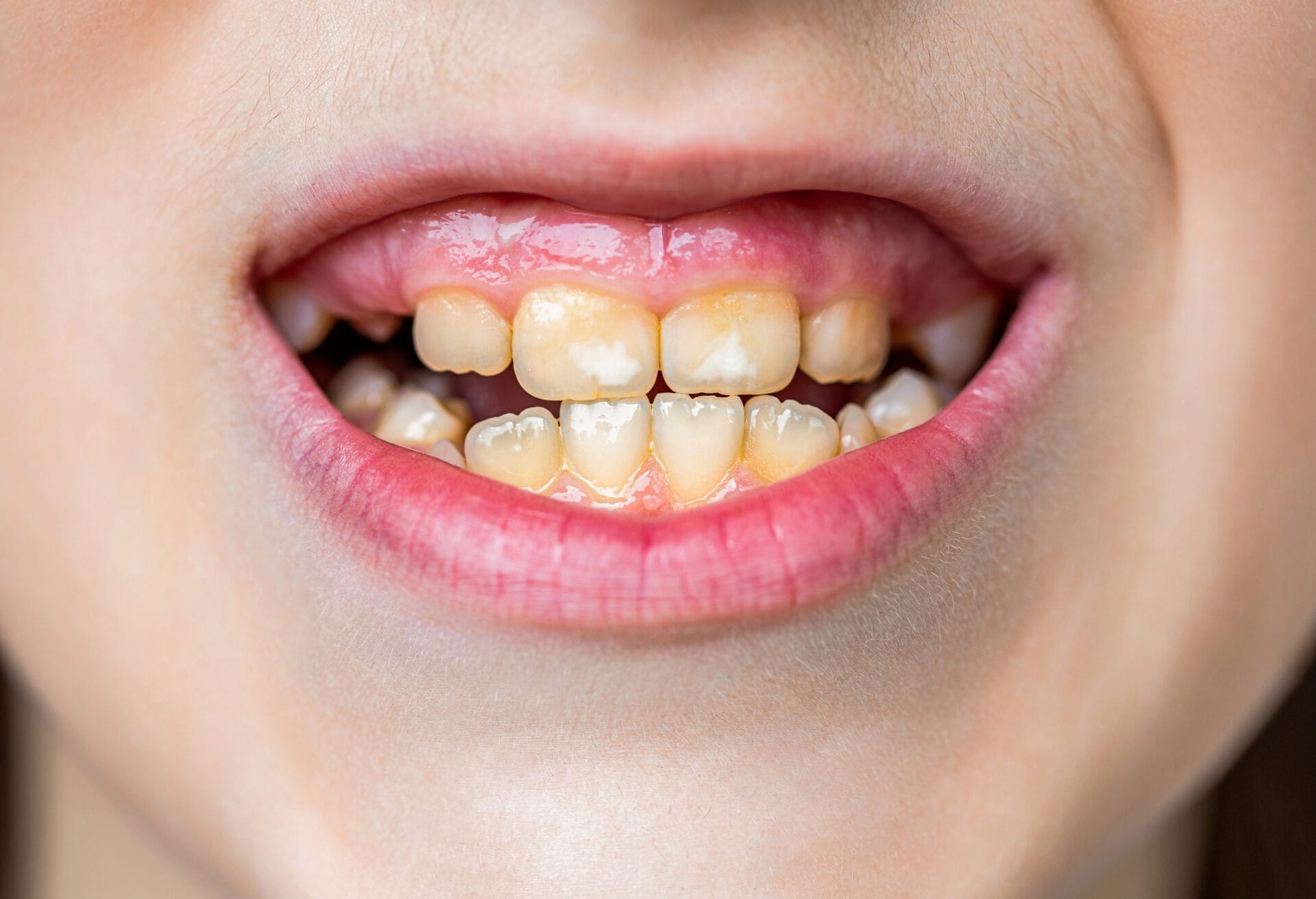
The earliest sign of a cavity is a chalky white spot on the enamel, followed by sensitivity to sweet, hot, or cold stimuli and food packing between teeth. The 6 most common early warning signs are: a visible white or brown spot, sensitivity when eating sweet foods, sensitivity to cold that fades within 5 seconds, mild discomfort when brushing, food trapping where it did not before, and a rough edge detected with the tongue (Healthdirect Australia — Dental check-up). Because early decay is often invisible to the naked eye, the most reliable detection is a clinical exam plus bitewing X-rays at the 6-monthly check-up.
How does Palm Beach Dental treat a small cavity?
A small cavity is treated with a tooth-coloured composite filling in a single visit, removing the decayed tissue, sealing the tooth, and restoring the bite. The 4 steps are: numb the tooth with local anaesthetic, gently remove the decayed enamel and dentine, layer tooth-coloured composite resin into the cavity, and cure each layer with a blue LED light. The bite is checked and adjusted before a final polish. The practice’s published price list shows small fillings start at AUD 165, with larger multi-surface fillings up to AUD 435.
When does a cavity need a crown instead of a filling?
A cavity needs a crown when more than 50% of the natural tooth is missing, when the cavity extends below the gumline, or when the tooth has had root canal treatment and needs full coverage to prevent fracture. The 4 clinical situations that point to a crown are: a large cavity that leaves thin walls, a tooth that has cracked, a tooth with a large existing filling that has failed again, and a root-canal-treated posterior tooth. The practice’s crown and bridge service uses modern ceramic materials matched to the natural tooth shade, and treatment takes 2 visits about 2 weeks apart.
How can I prevent cavities from forming?
Prevention combines dietary change, fluoride exposure, daily mechanical cleaning, and 6-monthly professional check-ups — and 5 high-impact habits do most of the work. The 5 most effective habits are: brushing twice daily with fluoride toothpaste, cleaning between teeth once daily, drinking tap water (fluoridated across most of the Gold Coast), limiting free-sugar intake to less than 6 teaspoons per day as recommended by the WHO, and attending a check-up and clean every 6 months. For children, the practice is a CDBS provider and bulk-bills eligible kids up to AUD 1,052 over 2 years.
How much does filling treatment cost in Palm Beach?
Fillings at Palm Beach Dental range from AUD 165 for a small one-surface filling to AUD 435 for a large multi-surface restoration, with the exact cost confirmed after examination. The practice publishes a transparent price list and itemises treatment by the number of surfaces restored. All major health funds and Veterans Affairs are accepted. Patients without insurance can use Afterpay (4 interest-free instalments) or Humm National Dental Plan. CDBS-eligible children are bulk-billed up to AUD 1,052 over 2 calendar years.
Frequently asked questions
Can a cavity heal on its own? Early-stage enamel demineralisation (a white-spot lesion) can re-mineralise with fluoride and good oral hygiene. Once a cavity has formed a hole, the decayed structure does not regenerate and needs a filling.
Are silver fillings still used? Most modern Australian practices, including Palm Beach Dental, use tooth-coloured composite resin. Amalgam is still used in some public dental services but is less common in private practice.
Does sugar-free drinks cause cavities? Diet drinks are less cariogenic than sugary drinks but are still acidic and can erode enamel. Water and plain milk are the safest everyday choices.
How often should my child see the dentist? The Australian Dental Association recommends a first visit by age 1, then 6-monthly check-ups. The practice is a CDBS provider and bulk-bills eligible children.
What is the best toothpaste for cavity prevention? Any fluoride toothpaste carrying the Australian Dental Association seal of approval is appropriate. For high-risk patients, a higher-fluoride prescription toothpaste may be recommended.
Where is the practice located? 1142 Gold Coast Highway, Palm Beach, QLD, with off-street parking via Palm Beach Avenue. Neighbouring Currumbin patients reach the clinic in roughly 10 minutes.
All dental procedures involve potential risks and benefits. The information provided in this blog is general in nature and should not be taken as medical advice. We recommend that you seek guidance from a suitably qualified health professional before making decisions about your oral health. Where appropriate, you may also wish to consider obtaining a second opinion. Any images or videos featured are shared with the informed consent of our patients and are intended for educational purposes only. They are not a guarantee of results, as every patient is unique. Treatment outcomes — including recovery, potential complications, and effectiveness — can vary from person to person.
References
- World Health Organization. Sugars and dental caries. https://www.who.int/news-room/fact-sheets/detail/sugars-and-dental-caries
- Australian Institute of Health and Welfare. Oral health and dental care in Australia. https://www.aihw.gov.au/reports/dental-oral-health/oral-health-and-dental-care-in-australia/contents/summary
- Better Health Channel (State of Victoria). Tooth decay. https://www.betterhealth.vic.gov.au/health/conditionsandtreatments/Tooth-decay
- Australian Dental Association. Dental care for children. https://www.ada.org.au/Your-Dental-Health/Children-0-11/Dental-care-for-children
- Healthdirect Australia. Dental check-up. https://www.healthdirect.gov.au/dental-check-up
Where Can You Receive Tooth Decay Care in Palm Beach?
If you are looking for cavity or tooth decay care in Palm Beach or the Gold Coast, early assessment makes a difference. At Palm Beach Dental, tooth decay care is approached with prevention-first philosophy. From dental fillings and check-up and clean appointments to root canal treatment for teeth with deep decay, the focus is on stopping decay early. Whether it is a small filling or a planned restoration, every patient receives guidance tailored to their specific decay risk, helping support long term oral health.