Bleeding gums are one of the most common reasons people pick up the phone and book a dental appointment — and one of the easiest problems to fix, if the cause is caught early. The single most important thing to know is that healthy gums do not bleed from normal brushing or flossing, so any bleeding is a signal worth paying attention to. At Palm Beach Dental, every check-up includes a gum assessment, and Dr Jijesh Nhalila-Valappil and the team can usually resolve the bleeding with a professional clean, a small change to home care, or a short course of deeper treatment. The practice has been looking after Gold Coast families for nearly 50 years, and our transparent pricing is published in full on the website.
Why do my gums bleed when I brush?
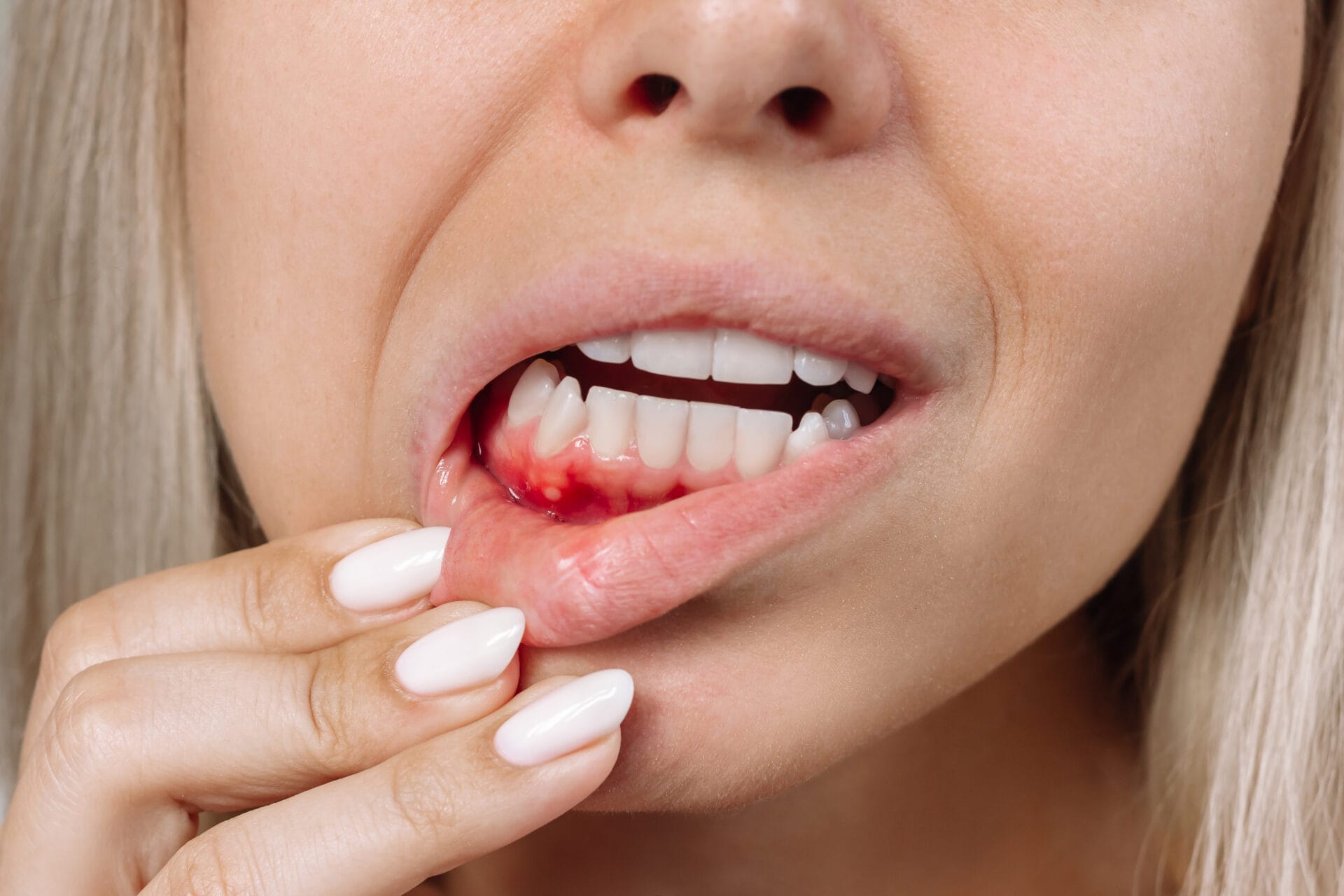
Your gums bleed when you brush because plaque bacteria at the gumline are triggering inflammation, and the inflamed gum tissue is fragile and bleeds on contact. The Australian Dental Association is clear: healthy gums do not bleed from normal brushing or flossing, and bleeding is the most reliable early sign of gum inflammation. The plaque is the soft, sticky film that forms on the teeth within hours of brushing. If it is not removed, the bacteria in it irritate the gum and the small blood vessels just under the surface become engorged and fragile. A toothbrush, a piece of floss, or even a hard piece of food can then nick the surface and cause the bleeding. It is the gum’s version of a paper cut on irritated skin — the bleeding is a sign the tissue is already inflamed, not the cause of the problem.
Is bleeding gums a sign of gum disease?
Yes — bleeding gums are the earliest sign of gum disease (gingivitis), and in most cases the bleeding stops once the plaque is removed and the gum heals. Gingivitis is the reversible, early stage of gum disease where the gum is inflamed but the bone underneath is still intact. The published literature puts the prevalence of gingivitis in Australian adults at roughly 50–90% depending on age and definition, which makes it one of the most common health conditions in the country. The good news is that, because no bone has been lost yet, the bleeding and the inflammation are fully reversible with a professional clean and a few weeks of improved home care. Left untreated, however, gingivitis can progress to periodontitis, where the bone holding the teeth is lost — and that damage is permanent. The earlier the bleeding is taken seriously, the simpler the treatment.
What at-home changes stop bleeding gums?
Three at-home changes stop most bleeding gums: switch to a soft-bristled toothbrush and gentle technique, clean between the teeth daily with floss or interdental brushes, and reduce the plaque build-up at the gumline. Healthdirect Australia notes that vigorous side-to-side brushing along the gumline is a leading cause of bleeding in otherwise healthy patients, because it wears away the gum and exposes the sensitive root surface. The fix is a small, soft-bristled brush, held like a pen, with gentle circular or vertical strokes angled into the gumline — not the hard side-to-side scrubbing most people default to. The second change is interdental cleaning: floss, interdental brushes, or a Waterpik all remove the plaque that the toothbrush cannot reach. The third is consistency — a few days of careful cleaning usually stops the visible bleeding, but the underlying inflammation takes 2–3 weeks to fully resolve.
When should I see a dentist about bleeding gums?
You should see a dentist about bleeding gums if the bleeding has lasted more than 2 weeks despite improved home care, if the bleeding is getting worse, if a single area bleeds heavily, or if the gums are red, swollen, or receding. Better Health Channel flags that persistent bleeding is the most important sign that the inflammation has progressed beyond what home care alone can fix. Other red flags include: a bad taste or smell that does not improve with brushing, a loose tooth, a pimple on the gum (a sinus tract), a change in the way the teeth fit together, or bleeding that wakes you at night. Any of these is a reason to book a check-up within the week rather than waiting for the next routine visit. Children with bleeding gums should be seen promptly as well — a short check-up is usually enough to rule out the more serious causes, and our children’s dentistry service is set up for that.
How does a professional clean help bleeding gums?
A professional clean helps bleeding gums by removing the plaque and calculus (hardened plaque) above and just below the gumline, which is the irritant the body has been reacting to — and within 2 weeks of a thorough clean, the inflammation usually settles and the bleeding stops. A standard check-up and clean at Palm Beach Dental includes a polish to remove surface stains and plaque, and a scale to remove the calculus that has built up in the hard-to-reach places. For patients with more advanced build-up, a deep clean (scaling and root planing) below the gumline is the next step. The published price for a routine check-up and clean is on the website from about AUD 185, and the team explains what is included before treatment begins. Our general dentistry service is the home of this preventive care.
How long does it take for bleeding gums to heal?
Most cases of bleeding gums heal within 2–3 weeks of starting improved home care and a professional clean, with the visible bleeding usually stopping within 3–5 days of consistent cleaning. The healing follows a predictable pattern: within 3–5 days, the visible bleeding stops; within 2 weeks, the redness and swelling have eased; within 3–4 weeks, the gum is back to its healthy pink colour and firm texture. Three things speed the healing: brushing twice a day with a soft brush, cleaning between the teeth once a day, and not smoking. The single thing that slows it most is smoking — nicotine constricts the blood vessels in the gum, which both causes the bleeding to be less obvious (masking the problem) and slows the healing once cleaning is in place. For neighbouring West Burleigh patients and other Gold Coast families, the best way to keep the result stable is a six-monthly check-up and clean.
Frequently asked questions
Are bleeding gums serious?
Bleeding gums are the first sign of gum inflammation, which is reversible. Left untreated, the inflammation can progress to periodontitis, which is a more serious condition that can lead to tooth loss. The earlier the bleeding is addressed, the simpler the fix.
Can bleeding gums be a sign of something other than gum disease?
Yes — bleeding gums can also be caused by vigorous brushing, a new flossing routine, hormonal changes (pregnancy, puberty, menopause), certain medications (blood thinners, some blood-pressure drugs), vitamin deficiencies, and blood disorders. A dental check-up can usually distinguish these from gum disease.
Can I stop bleeding gums by brushing less?
No. Brushing less allows more plaque to build up, which makes the inflammation worse. The right response is to brush twice a day with a soft brush and a gentle technique, and to clean between the teeth once a day.
Will a mouthwash fix bleeding gums?
A short course of chlorhexidine mouthwash can help settle acute inflammation, but it does not remove the plaque and calculus that caused the problem. Long-term use of chlorhexidine can stain the teeth, so it is not a permanent solution.
How often should I get a clean if my gums bleed?
Most patients with a history of bleeding gums benefit from a 6-monthly professional clean. If the gum disease is more advanced, the dentist may recommend a 3–4 monthly maintenance schedule for the first year.
Can children get bleeding gums?
Yes — children and teenagers can develop gingivitis, especially during orthodontic treatment or when their brushing slips. Children’s dentistry appointments at Palm Beach Dental are bulk-billed under the CDBS for eligible kids, which keeps the cost down for families.
Where Can You Receive Bleeding Gums Care in Palm Beach?
If you are looking for bleeding gums care in Palm Beach or the Gold Coast, personalised assessment makes a difference. At Palm Beach Dental, bleeding gums are approached with a quick check to find the cause, a professional clean to remove the build-up, and a tailored home-care plan to keep the bleeding from coming back. From a routine scale and clean to a deeper clean below the gumline, the focus is on calming the inflammation and keeping the natural teeth stable for life. Whether the bleeding is mild or has been happening for months, every patient receives guidance tailored to their specific gum health, brushing technique, and risk factors, helping support long term oral health and comfort.
References
- Australian Dental Association — https://www.ada.org.au
- Healthdirect Australia — https://www.healthdirect.gov.au
- Better Health Channel (Victoria) — https://www.betterhealth.vic.gov.au
- National Health and Medical Research Council (NHMRC) — https://www.nhmrc.gov.au
- Australian Health Practitioner Regulation Agency (AHPRA) — https://www.ahpra.gov.au
All dental procedures involve potential risks and benefits. The information provided in this blog is general in nature and should not be taken as medical advice. We recommend that you seek guidance from a suitably qualified health professional before making decisions about your oral health. Where appropriate, you may also wish to consider obtaining a second opinion. Any images or videos featured are shared with the informed consent of our patients and are intended for educational purposes only. They are not a guarantee of results, as every patient is unique. Treatment outcomes — including recovery, potential complications, and effectiveness — can vary from person to person.