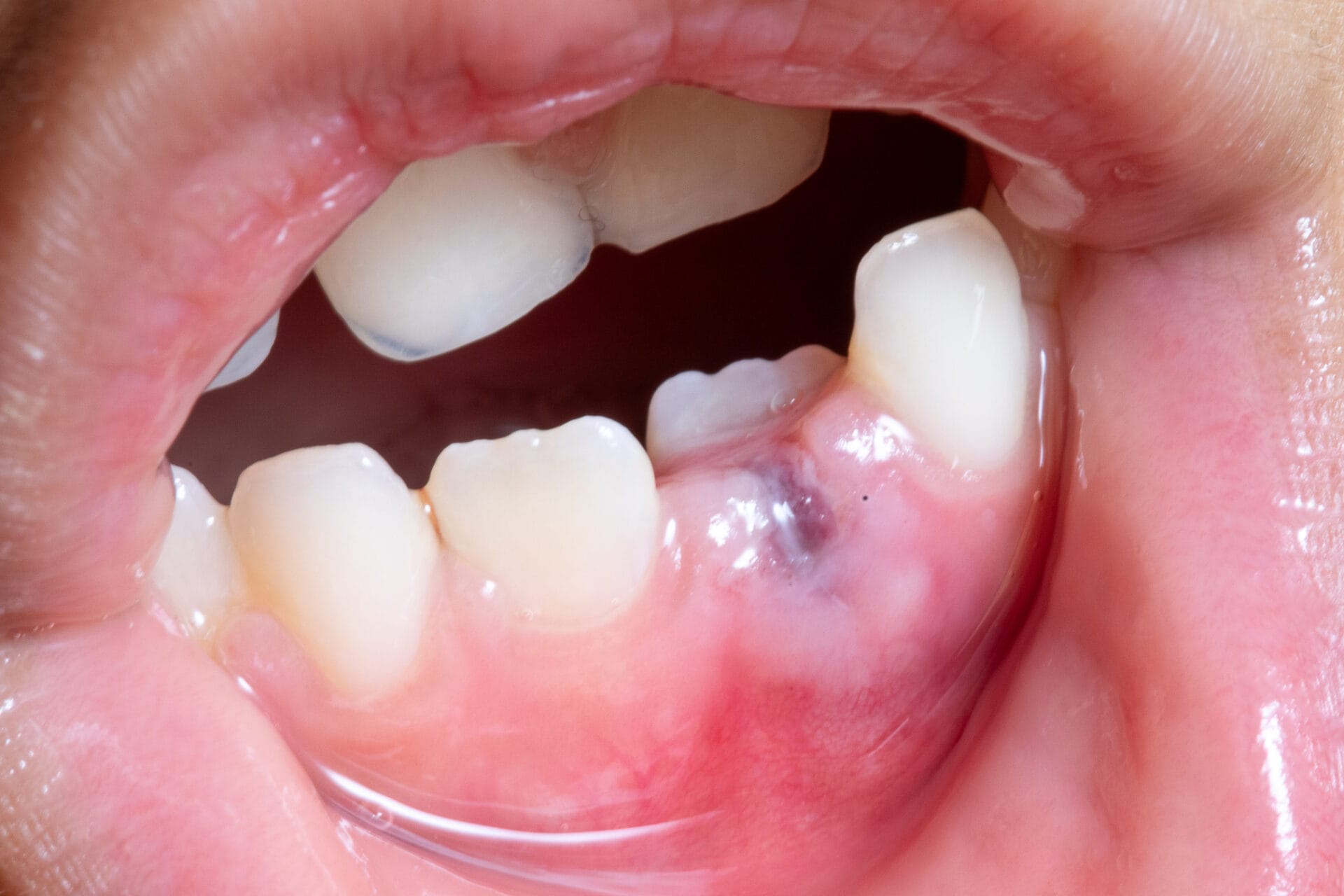
A dental abscess is the body’s response to an infection that has spread beyond the tooth’s inner pulp into the surrounding bone and gum, and it rarely settles on its own. At Palm Beach Dental, a 5-decade practice on the Gold Coast Highway, principal dentist Dr Jijesh Nhalila-Valappil (Masters in Public Health, ADA and AACD member) sees abscess cases the same day, with onsite 3D X-ray to identify the source and a clear plan to either save or remove the tooth. This article explains what an abscess looks like, when to seek hospital care, and what treatment actually involves.
What does a dental abscess look and feel like?
A dental abscess presents as a pus-filled swelling on the gum, severe throbbing pain, sensitivity to pressure and hot/cold, and sometimes a bad taste or fever. The 5 most common signs are: a pimple-like bump (gum boil) on the gum near the tooth root, persistent throbbing pain that wakes you at night, sensitivity to hot and cold, facial swelling on the affected side, and a foul taste from draining pus (Healthdirect Australia — Dental abscess). The swelling may be a periapical abscess (originating inside the tooth) or a periodontal abscess (originating in the gum and bone).
When is a dental abscess a medical emergency?
A dental abscess is a medical emergency when swelling affects swallowing, breathing, or eye opening, or when a high fever suggests the infection has spread beyond the tooth. The 4 red flags that warrant immediate hospital attendance are: difficulty swallowing or opening the mouth, swelling that crosses the midline of the face or closes the eye, fever above 38 °C with chills, and a spreading red streak down the neck (Better Health Channel — Tooth abscess). These signs suggest the infection is no longer localised and requires intravenous antibiotics and surgical drainage in a hospital setting.
How does Palm Beach Dental treat a tooth abscess?
Treatment follows 3 steps: drain the pus, eliminate the source of infection, and restore or replace the tooth. On the first visit, the team relieves pressure by either lancing a small gum-boil incision, opening the tooth through the crown to drain, or removing the tooth if it is non-restorable. Local anaesthetic and sedation options (nitrous oxide at AUD 99/hr or sleep sedation at AUD 599/hr) keep the visit comfortable. Onsite OPG and 3D X-ray confirm how far the infection has spread into the bone.
Will I need a root canal or an extraction?
The decision between root canal and extraction depends on whether the tooth is restorable, the amount of remaining bone, and your long-term treatment goals. A tooth is a candidate for root canal when at least 50% of the natural crown and surrounding bone remains healthy. Teeth with cracks below the gumline, severe bone loss, or failed previous root canals are usually better extracted and replaced with a dental implant or bridge. Dr Jijesh discusses both options, including long-term prognosis and cost, before proceeding.
What antibiotics are used for a dental abscess?
Antibiotics (commonly amoxicillin or metronidazole, with clindamycin for penicillin-allergic patients) are prescribed only when there is spreading infection, systemic illness, or a compromised immune system; they do not cure the abscess on their own. Australian prescribing guidance is clear: antibiotics are an adjunct to definitive dental treatment, not a substitute (Australian Dental Association; Therapeutic Goods Administration). Drainage of the pus and removal of the source are the treatments that resolve the infection. Taking antibiotics without addressing the source delays care and contributes to antimicrobial resistance, a national health priority.
How do I prevent a dental abscess from coming back?
Prevention centres on treating decay early, maintaining 6-monthly check-ups, and addressing gum disease before an abscess can form. The 4 most effective prevention habits are: brushing twice daily with fluoride toothpaste, flossing or using interdental brushes once a day, attending 6-monthly check-up and clean appointments, and treating decay or cracked teeth before the pulp becomes infected. For patients with a history of gum disease, more frequent hygiene visits (every 3–4 months) reduce the risk of periodontal abscesses.
How much does abscess treatment cost in Palm Beach?
Root canal treatment ranges from AUD 899 to AUD 1,899, and simple extractions from AUD 179 to AUD 299, with quotes confirmed before treatment begins. The practice publishes a transparent price list on the website and confirms any out-of-pocket figure before treatment begins. All major health funds and Veterans Affairs are accepted, and interest-free Afterpay (4 instalments) and Humm National Dental Plan help patients spread the cost. Sedation is itemised separately, so there are no surprise bills.
Frequently asked questions
Can a dental abscess go away with antibiotics alone? No. Antibiotics reduce the spread of infection but do not remove the source. Without drainage and definitive treatment, the abscess returns.
How long does an abscess take to heal after treatment? Most patients feel significant relief within 24–48 hours of drainage. The gum heals over 1–2 weeks, and bone remodelling continues for several months.
Is a dental abscess contagious? No. The infection is contained locally in the tooth and surrounding bone, and cannot be passed to another person through normal contact.
What if I have an abscess and am pregnant? Local anaesthetic and most antibiotics used in dentistry are considered safe in pregnancy, but always tell the team so they can tailor the plan and liaise with your obstetrician.
Will the abscess come back after a root canal? Recurrence is uncommon when the root canal is well-performed and a permanent crown is placed. Without a crown, the tooth can crack and reinfect.
Where is the practice? 1142 Gold Coast Highway, Palm Beach, QLD, with off-street parking accessed via Palm Beach Avenue. Neighbouring West Burleigh patients reach the clinic in about 5–10 minutes.
All dental procedures involve potential risks and benefits. The information provided in this blog is general in nature and should not be taken as medical advice. We recommend that you seek guidance from a suitably qualified health professional before making decisions about your oral health. Where appropriate, you may also wish to consider obtaining a second opinion. Any images or videos featured are shared with the informed consent of our patients and are intended for educational purposes only. They are not a guarantee of results, as every patient is unique. Treatment outcomes — including recovery, potential complications, and effectiveness — can vary from person to person.
References
- Healthdirect Australia. Dental abscess. https://www.healthdirect.gov.au/dental-abscess
- Better Health Channel (State of Victoria). Tooth abscess. https://www.betterhealth.vic.gov.au/health/conditionsandtreatments/Tooth-abscess
- Australian Dental Association. https://www.ada.org.au
- Therapeutic Goods Administration (TGA). https://www.tga.gov.au
- Australian Government Department of Health and Aged Care. Dental health. https://www.health.gov.au/topics/dental-health
Where Can You Receive Dental Abscess Care in Palm Beach?
If you are looking for dental abscess care in Palm Beach or the Gold Coast, urgent assessment makes a difference. At Palm Beach Dental, abscess care is approached with prompt, gentle drainage. From emergency dental care and incision to root canal treatment that saves the tooth, the focus is on removing the source of infection. Whether it is a same-day drain or a planned root canal, every patient receives guidance tailored to their specific infection, helping support long term oral health and comfort.